- Balancing Connection and Creativity Amid AI
After nearly three decades in corporate America, my work life changed and I found myself returning to the writing I had done randomly for years. Poems, fragments, and unfinished ideas had been sitting in…
Read more: Balancing Connection and Creativity Amid AI
- Meeting Your Maker
Explore the significance of activities beyond external success. They emphasize self-discovery and personal growth through the process of making, rather than seeking immediate validation.
- The Life You’re Waiting For Starts With You
For a long time, I thought personal growth happened because someone else showed up. A mentor. A friend. The right opportunity. The right timing. Someone who finally believed in me. Those things can help…
Read more: The Life You’re Waiting For Starts With You
- Stop Letting Other People Hold the Mirror
In early careers, many seek validation from others, leading to distorted self-perceptions. Key reminders include recognizing feedback as information, avoiding self-change for approval, defining personal success, and understanding that different people see different aspects of oneself. Ultimately, true self-awareness requires introspection and prioritizing personal perspective over external opinions.
- Don’t Mistake Fear for a Stop Sign
Growth often feels challenging rather than exciting, which can lead to doubts and fears resurfacing. This discomfort is a natural part of change and does not mean one should stop moving forward. It’s essential to recognize that building confidence and embracing uncertainty are vital in the growth process.
- The Power of Someone Seeing Something in You
Support from others can significantly shape our careers, as external feedback often helps us recognize our strengths that we overlook. Growth precedes confidence, and effective leaders foster independence by instilling self-belief in others. Ultimately, it is crucial to internalize that encouragement and convert it into personal self-belief.
- Accountability Isn’t Blame. It’s Where Change Begins.
Taking ownership differs from blaming oneself. While blame focuses on the past, accountability emphasizes future actions. Practicing accountability involves reframing negative narratives, concentrating on controllable aspects, and following through on commitments. Growth stems from self-honesty and recognizing that personal change often begins with the conversations we have with ourselves.
- The Monster We Bring to Work
Some of the hardest conversations you have at work are the ones no one else hears. The ones where you wonder: “Am I actually ready?”“What if I fail?”“Who am I to think I can…
Read more: The Monster We Bring to Work
- The Person You’re Waiting For Is You
Many people wait for others to guide their career growth, often hoping for validation from managers or mentors. However, true development comes from self-leadership, which involves taking initiative, learning from mistakes, and trusting oneself. Ultimately, individuals must recognize their own power to shape their future and advocate for their potential.
- Don’t Talk, Just Do: Moving Forward When You Feel Stuck
Overthinking can hinder our progress towards goals, often fueled by fear of failure or inadequacy. Instead of analyzing endlessly, taking small actions—such as sending a message or trying something new—can create momentum. Embracing imperfections and making consistent decisions fosters personal growth, as emphasized in the poem and song “Don’t Talk, Just Do.”
- HR – The Things You See and the Ones You Don’t
The post reflects on the emotional challenges faced by HR professionals during layoffs, emphasizing the contrast between external perceptions and internal struggles while highlighting the complexity of balancing business and human experiences.
- 2:56 Work Break
When you need a bit of motivation to keep going, check out a bit of alt pop. This song was created based on a poem written about 30 years or more ago. When you…
Read more: 2:56 Work Break
- Are AI Tools Boosting Creative Expression?
The conversation around AI in creative fields raises questions about authenticity and ownership. While technology aids expression, it can challenge perceptions of legitimacy. Ultimately, the focus may shift from traditional skills to the value of ideas and emotional connections in creativity.
- Some Limits are Real, Others are Not
Many limitations stem from past adaptations that once protected individuals but now restrict growth. Distinguishing between real constraints and internalized limitations is crucial for questioning old beliefs and embracing new possibilities for personal development.
- Sometimes the Way to Focus on What Can Go Right… Is to Notice What Can Go, Right?
Optimism is essential at work, but sometimes progress requires removing unproductive elements, such as ineffective processes or toxic relationships, to create space for growth and positivity.
- Constraint or Choice? – Why it matters.
Sometimes at work we can be quick to label things as “problems.” The workload is too high. Leadership isn’t clear. A colleague is difficult. The timeline is unrealistic. Most situations aren’t just problems. They’re…
Read more: Constraint or Choice? – Why it matters.
- Do Men Really “Solve Problems” While Women “Listen”?
The differences in communication between men and women might be overstated. Both genders solve problems in unique ways, either focusing on situational fixes or emotional understanding, leading to misunderstandings in conversations about their respective needs.
- The Fine Line Between AI and Creativity
As a person who worked in corporations for over 25 years and who now uses AI to help create music out of lyrics I’ve written, some thoughts on AI usage have popped up for…
Read more: The Fine Line Between AI and Creativity
- 10 Common Values Americans Share Across Political Lines
Scroll any headline and it’s easy to believe we Americans are deeply divided. The data tells a more grounded story: we have far more in common than we think. Here are 10 ways Americans…
Read more: 10 Common Values Americans Share Across Political Lines
- Diameter of Discontent
Embrace discontent as a catalyst for growth by acknowledging its presence and taking proactive steps toward change and clarity.
- 100 Pages We Overlay Onto Others
The notion that we approach books and people with pre-existing biases suggests that our past experiences shape how we perceive new narratives. First impressions often mislead, blending our interpretations with others’ realities. To foster better understanding, we should remain curious and aware of our biases, allowing others to define their own stories.
- Tailoring Your Environment for Optimal Growth
We often talk about what people need to thrive as if the answer is universal. More sunlight.More support.More freedom.More feedback. What are you trying to grow? A plant doesn’t need “everything.” A fern and…
Read more: Tailoring Your Environment for Optimal Growth
- Be Your Authentic Self at Work”: Is That the Same as Bringing Your Whole Self?
The concepts of “be your authentic self” and “bring your whole self to work” differ significantly. Authenticity focuses on aligning personal values internally, while the latter emphasizes a safe environment for external expression of identity. Both concepts require discernment, highlighting the need for intentionality in how one presents themselves in various contexts.
- Why Authenticity Isn’t Always About Full Disclosure
The concept of being your “authentic self” is appealing but complex in practice. Eric Barker emphasizes that authenticity involves adapting to different contexts rather than being unfiltered. Emotional intelligence plays a vital role in knowing how to express oneself appropriately in varied environments, especially at work, while still being true to one’s identity.
- Why We Hold On Too Long
Loss aversion in Behavioral Economics shows that people often prioritize avoiding losses over pursuing gains, leading to suboptimal decisions. This mindset causes individuals to stay in unsatisfactory jobs or cling to failing projects. A key to better decision-making is reframing questions to focus on current costs rather than potential losses.
- Why Smart People Make Bad Decisions (and How to Choose Better)
Behavioral Economics reveals that our decisions are often influenced by biases and emotions. To improve decision-making, establish effective defaults, simplify choices, and focus on long-term outcomes. By understanding our cognitive patterns, we can better architect our decisions, leading to enhanced productivity and fulfillment.
 After nearly three decades in corporate America, my work life changed and I found myself returning to the writing I had done randomly for years. Poems, fragments, and unfinished ideas had been sitting in… Read more: Balancing Connection and Creativity Amid AI
 Explore the significance of activities beyond external success. They emphasize self-discovery and personal growth through the process of making, rather than seeking immediate validation.
 For a long time, I thought personal growth happened because someone else showed up. A mentor. A friend. The right opportunity. The right timing. Someone who finally believed in me. Those things can help… Read more: The Life You’re Waiting For Starts With You
 In early careers, many seek validation from others, leading to distorted self-perceptions. Key reminders include recognizing feedback as information, avoiding self-change for approval, defining personal success, and understanding that different people see different aspects of oneself. Ultimately, true self-awareness requires introspection and prioritizing personal perspective over external opinions.
 Growth often feels challenging rather than exciting, which can lead to doubts and fears resurfacing. This discomfort is a natural part of change and does not mean one should stop moving forward. It’s essential to recognize that building confidence and embracing uncertainty are vital in the growth process.
 Support from others can significantly shape our careers, as external feedback often helps us recognize our strengths that we overlook. Growth precedes confidence, and effective leaders foster independence by instilling self-belief in others. Ultimately, it is crucial to internalize that encouragement and convert it into personal self-belief.
 Taking ownership differs from blaming oneself. While blame focuses on the past, accountability emphasizes future actions. Practicing accountability involves reframing negative narratives, concentrating on controllable aspects, and following through on commitments. Growth stems from self-honesty and recognizing that personal change often begins with the conversations we have with ourselves.
 Some of the hardest conversations you have at work are the ones no one else hears. The ones where you wonder: “Am I actually ready?”“What if I fail?”“Who am I to think I can… Read more: The Monster We Bring to Work
 Many people wait for others to guide their career growth, often hoping for validation from managers or mentors. However, true development comes from self-leadership, which involves taking initiative, learning from mistakes, and trusting oneself. Ultimately, individuals must recognize their own power to shape their future and advocate for their potential.
 Overthinking can hinder our progress towards goals, often fueled by fear of failure or inadequacy. Instead of analyzing endlessly, taking small actions—such as sending a message or trying something new—can create momentum. Embracing imperfections and making consistent decisions fosters personal growth, as emphasized in the poem and song “Don’t Talk, Just Do.”
 The post reflects on the emotional challenges faced by HR professionals during layoffs, emphasizing the contrast between external perceptions and internal struggles while highlighting the complexity of balancing business and human experiences.
 The conversation around AI in creative fields raises questions about authenticity and ownership. While technology aids expression, it can challenge perceptions of legitimacy. Ultimately, the focus may shift from traditional skills to the value of ideas and emotional connections in creativity.
 Many limitations stem from past adaptations that once protected individuals but now restrict growth. Distinguishing between real constraints and internalized limitations is crucial for questioning old beliefs and embracing new possibilities for personal development.
 Optimism is essential at work, but sometimes progress requires removing unproductive elements, such as ineffective processes or toxic relationships, to create space for growth and positivity.
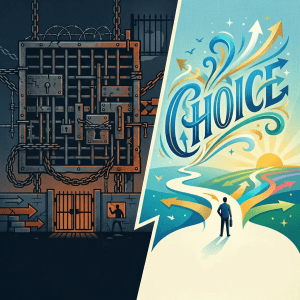 Sometimes at work we can be quick to label things as “problems.” The workload is too high. Leadership isn’t clear. A colleague is difficult. The timeline is unrealistic. Most situations aren’t just problems. They’re… Read more: Constraint or Choice? – Why it matters.
 The differences in communication between men and women might be overstated. Both genders solve problems in unique ways, either focusing on situational fixes or emotional understanding, leading to misunderstandings in conversations about their respective needs.
 As a person who worked in corporations for over 25 years and who now uses AI to help create music out of lyrics I’ve written, some thoughts on AI usage have popped up for… Read more: The Fine Line Between AI and Creativity
 Scroll any headline and it’s easy to believe we Americans are deeply divided. The data tells a more grounded story: we have far more in common than we think. Here are 10 ways Americans… Read more: 10 Common Values Americans Share Across Political Lines
 Embrace discontent as a catalyst for growth by acknowledging its presence and taking proactive steps toward change and clarity.
 The notion that we approach books and people with pre-existing biases suggests that our past experiences shape how we perceive new narratives. First impressions often mislead, blending our interpretations with others’ realities. To foster better understanding, we should remain curious and aware of our biases, allowing others to define their own stories.
 We often talk about what people need to thrive as if the answer is universal. More sunlight.More support.More freedom.More feedback. What are you trying to grow? A plant doesn’t need “everything.” A fern and… Read more: Tailoring Your Environment for Optimal Growth
 The concepts of “be your authentic self” and “bring your whole self to work” differ significantly. Authenticity focuses on aligning personal values internally, while the latter emphasizes a safe environment for external expression of identity. Both concepts require discernment, highlighting the need for intentionality in how one presents themselves in various contexts.
 The concept of being your “authentic self” is appealing but complex in practice. Eric Barker emphasizes that authenticity involves adapting to different contexts rather than being unfiltered. Emotional intelligence plays a vital role in knowing how to express oneself appropriately in varied environments, especially at work, while still being true to one’s identity.
 Loss aversion in Behavioral Economics shows that people often prioritize avoiding losses over pursuing gains, leading to suboptimal decisions. This mindset causes individuals to stay in unsatisfactory jobs or cling to failing projects. A key to better decision-making is reframing questions to focus on current costs rather than potential losses.
 Behavioral Economics reveals that our decisions are often influenced by biases and emotions. To improve decision-making, establish effective defaults, simplify choices, and focus on long-term outcomes. By understanding our cognitive patterns, we can better architect our decisions, leading to enhanced productivity and fulfillment.
